
Access Miami-Dade County Unclaimed Money
Miami-Dade County is the most populated county in Florida, and it also holds some of the largest unclaimed money balances in the state. Nearly 2.8 million people live here, so a huge number of accounts, checks, and court funds go uncollected each year. The Miami-Dade Clerk of Courts has taken steps to return surplus foreclosure funds to former homeowners, with millions of dollars identified across hundreds of cases. You can search for unclaimed money in Miami-Dade County through the clerk's office or the state's free database at FLTreasureHunt.gov.
Miami-Dade County Quick Facts
Miami-Dade Clerk of Courts
The Miami-Dade County Clerk of Courts handles local unclaimed money from court proceedings, tax deed sales, and foreclosure surplus. The main office is at 73 West Flagler Street in Miami. You can call (305) 275-1155 for general questions about unclaimed funds held by the clerk. The clerk's website provides access to case searches, court records, and information about surplus funds from legal proceedings in Miami-Dade County.
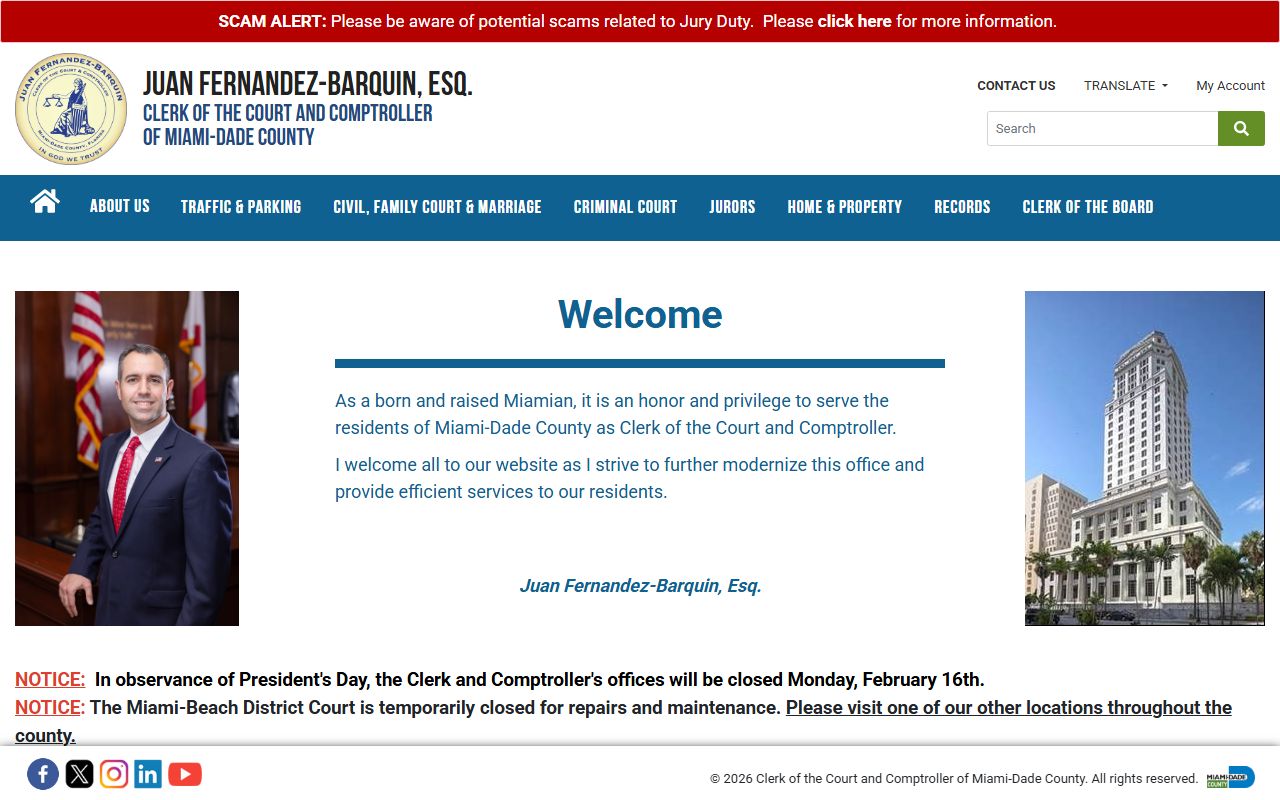
The Miami-Dade Clerk processes a high volume of cases each year. With nearly three million residents and a busy real estate market, the court system handles countless foreclosures, civil suits, and other matters that can result in unclaimed funds. If you were a party to any legal case in Miami-Dade County, check whether money from that case is still sitting in the court registry.
| Office | Miami-Dade County Clerk of Courts |
|---|---|
| Address | 73 W. Flagler St., Miami, FL 33130 |
| Phone | (305) 275-1155 |
| Website | miamidadeclerk.gov |
Miami-Dade County Foreclosure Surplus Funds
One of the biggest sources of unclaimed money in Miami-Dade County is surplus from mortgage foreclosure sales. When a foreclosed home sells at auction for more than the amount owed on the mortgage, the leftover money belongs to the former homeowner. Many people do not know these funds exist. They may have moved away from Miami-Dade County after losing a home and never learned that surplus money was left behind.
The Miami-Dade County mortgage foreclosures page on the clerk's website explains the program in detail and lists the rights of former homeowners to claim surplus sale proceeds.
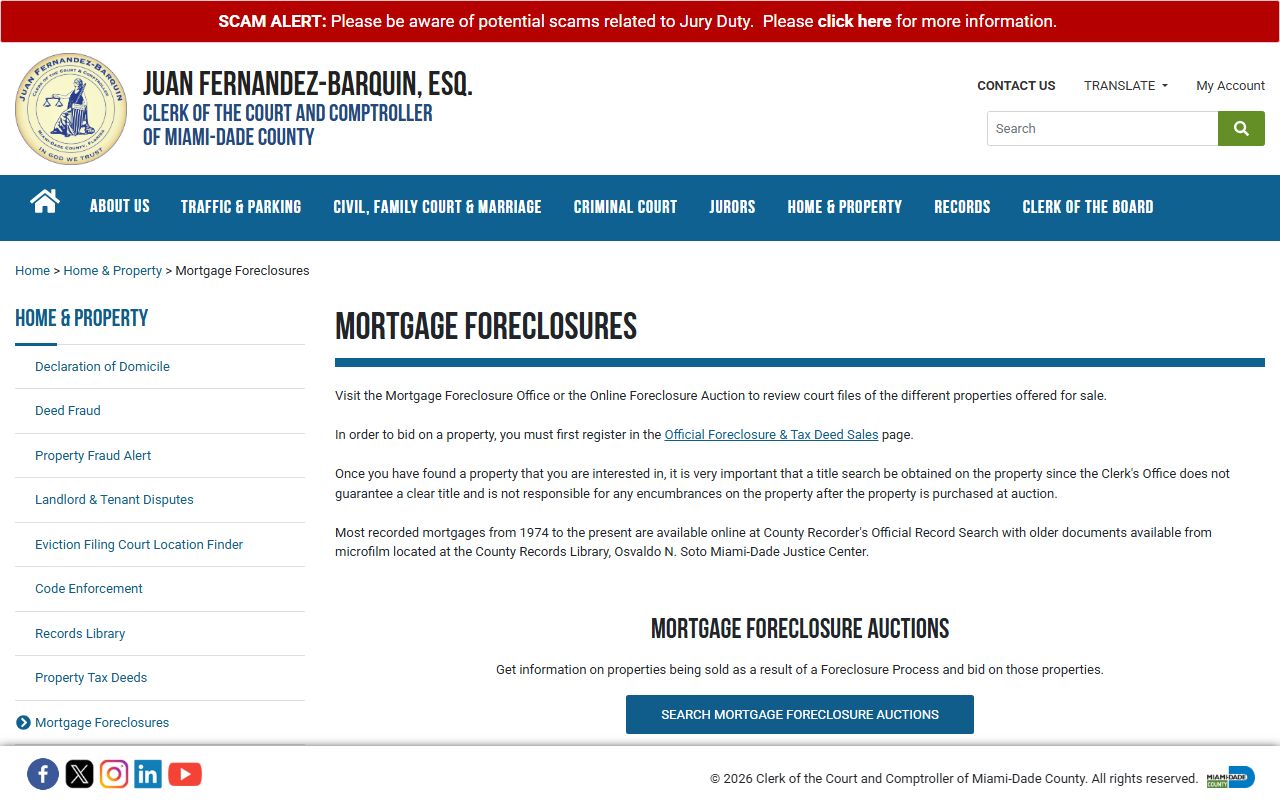
The clerk's office has filed actions with the court to determine who is entitled to surplus funds in hundreds of foreclosure cases. To date, the office has initiated actions in 439 foreclosure cases amounting to more than $4 million in surplus funds across Miami-Dade County. This is real money that belongs to real people. If you lost a home to foreclosure in Miami-Dade County at any point, it is well worth checking whether surplus funds are being held in your name.
Tax deed sales work in a similar way. When a property in Miami-Dade County sells at a tax deed auction for more than the back taxes owed, the surplus goes to the former owner. Under Chapter 197 of the Florida Statutes, the county holds those surplus funds for one year before they get sent to the state unclaimed property program. So the clock does tick on local claims. Act fast once you find out about them.
Note: Former homeowners in Miami-Dade County should check for foreclosure surplus even if the foreclosure happened years ago, since the funds may still be in the state system.
Search Florida Unclaimed Property
The Florida Department of Financial Services runs the state's main unclaimed property program. Their database at FLTreasureHunt.gov holds funds from all over the state, including billions of dollars from Miami-Dade County businesses and government agencies. Under Chapter 717, Florida Statutes, companies and agencies must report and turn over unclaimed property after a dormancy period. The general rule is five years for most account types.
Common types of unclaimed money from Miami-Dade County in the state database include dormant bank accounts, forgotten insurance proceeds, uncashed payroll checks, stock dividends, and utility deposits. The search is free. You can look up accounts for yourself, family members, or a business. Try all name variations. The FLTreasureHunt claim search page lets you search by person or business name and start a claim right away.
There is no time limit on claims. Florida law says owners or their heirs can claim funds at any time, free of charge. The state does not take ownership of the money. It just holds it until the right person comes along. Processing takes up to 90 days once you send in a complete claim with all required documents. Call the state at 888-258-2253 or email FloridaUnclaimedProperty@MyFloridaCFO.com for help with your Miami-Dade County claim.
How to Claim Unclaimed Money in Miami-Dade
The first step is to search. Go to FLTreasureHunt.gov and enter your name. If you find an account that looks like yours, you can start the claim process online. The site will walk you through it. You will get a claim form that tells you exactly what papers to send in.
Every claim needs proof of identity and proof that the unclaimed money belongs to you. At a minimum, you will need:
- Government-issued photo ID with your current address
- Proof of ownership like old bank statements or letters from the holder
- A signed claim form from the state website
- A W-9 form for tax reporting
- Death certificate if the original owner has passed away
Just having the same name as the account holder does not prove the money is yours. The state gets many claims from people with common names, and they need real proof. Old mail with a matching address, account numbers, or other documents that link you to the account will help your case. For deceased owners, all heirs must sign the claim form and provide their own identification. Read the claim form from start to finish because each one has specific instructions for that account.
Miami-Dade Court Registry Funds
Money deposited into the court during legal proceedings in Miami-Dade County is held in the court registry. This can include bond money, settlement funds, interpleader deposits, and funds from partition actions. The Clerk of Courts manages these accounts. If a case closes and money remains in the registry, it becomes unclaimed.
To get court registry funds in Miami-Dade County, you typically need a court order. That means you or a lawyer files a motion asking the judge to release the money to you. The judge reviews the request and signs an order if everything checks out. The clerk then cuts a check. For smaller or simpler cases, you may be able to handle this without a lawyer, but the process does require a formal motion and order in most situations. If the funds have already been sent to the state under Florida Statute 116.21, you would instead file a claim through FLTreasureHunt.gov.
Note: If you were involved in a civil case, probate matter, or guardianship in Miami-Dade County, check with the clerk to see if any funds remain in the court registry.
Avoid Unclaimed Money Scams in Miami-Dade
Scams targeting people with unclaimed money are common. The Florida Department of Financial Services warns about phishing scams where someone contacts you by text, email, or phone and pretends to be from the state. The state will not text you about unclaimed property. They will send you a letter in the mail. Never pay anyone to search for unclaimed money. The state database is free to search, and filing a claim costs nothing.
Some companies offer to find your unclaimed money for a percentage of the total. While this is legal in some cases, you do not need their help. You can do the same search at FLTreasureHunt.gov in a few minutes. The Florida Administrative Rules for unclaimed property spell out the official process. Any legitimate claim goes through the state or the Miami-Dade County Clerk's office directly.
Cities in Miami-Dade County
Miami-Dade County has over 30 incorporated cities and many unincorporated communities. All of them fall under the Miami-Dade Clerk of Courts for local unclaimed funds. If you lived in any Miami-Dade city, search for unclaimed money using your name and any past addresses.
Other communities in Miami-Dade County include Kendall, Coral Gables, Key Biscayne, Palmetto Bay, Pinecrest, and Opa-locka. Residents of all Miami-Dade areas should search for unclaimed money through the clerk and the state database.
Nearby Counties
These counties border Miami-Dade County. Search for unclaimed money in any county where you have lived, worked, or done business. The funds follow the location of the holder, not where you live now.