
St. Cloud Unclaimed Money
Unclaimed money tied to St. Cloud addresses is sitting in the Florida state database. The state holds lost funds from dormant bank accounts, uncashed paychecks, insurance payouts, and other financial assets connected to residents and businesses in the area. St. Cloud has grown fast, with its population now over 71,000, and that rapid growth creates a steady flow of unclaimed accounts as people move in and out of the area. Searching is free and takes just a few minutes. The Osceola County Clerk of Courts in nearby Kissimmee may also hold court-related funds belonging to St. Cloud residents.
St. Cloud Quick Facts
How to Search for Unclaimed Money in St. Cloud
Start at fltreasurehunt.gov and type in your name. This is the official state search tool run by the Florida Department of Financial Services. It checks every unclaimed account on file, including those tied to St. Cloud addresses. Results appear in seconds and show the holder name, property type, and reported amount.
Use every name you have gone by. Maiden names, former married names, and nicknames all matter. St. Cloud has attracted a lot of new residents in recent years. If you moved here from somewhere else in Florida, records might still list your old address. If you once lived in St. Cloud and left, your name could be sitting in the database under a St. Cloud address you no longer use. Try variations and misspellings of your name too. It is free to search as many times as you want.
Business owners in St. Cloud should search under the business name as well. Closed shops, dissolved LLCs, and inactive companies can all have money reported to the state.
Where St. Cloud Unclaimed Money Comes From
Chapter 717, Florida Statutes requires businesses and government agencies to hand over money they cannot return to its owner. Dormant bank accounts get reported after five years of no activity. Old paychecks become unclaimed after just one year. Insurance payouts, utility deposits, stock dividends, and vendor credits each follow their own schedules.
St. Cloud's growth has been driven by new housing developments, especially along Narcoossee Road and the areas east of town. Construction companies, home builders, and property managers all generate deposits and payroll. When workers finish a project and move on, or when homeowners relocate before all deposits are returned, that money eventually enters the state system. Retail employers along 13th Street and local service businesses contribute to the pool as well.
Rental deposits are common in St. Cloud's unclaimed money. The city has a mix of apartments, townhomes, and rental houses. When a tenant leaves without providing a new address, the landlord cannot return the security deposit. After the holding period, those funds get reported to the state.
Note: St. Cloud residents who commute to Orlando or Kissimmee for work should search under all addresses they have used, since unclaimed wages may be tied to a workplace zip code instead of a home address.
Osceola County Clerk and St. Cloud Court Funds
St. Cloud is in Osceola County. The Osceola County Clerk of Courts in Kissimmee handles all court-related money for the county, including cases involving St. Cloud residents. Cash bonds, lawsuit deposits, and court-ordered payments flow through this office. When someone does not pick up their money or moves without leaving contact information, those funds become unclaimed.
Tax deed surplus is something St. Cloud property owners should check. When a property sells at a tax deed auction for more than the back taxes owed, the extra money belongs to the former owner. Foreclosure surplus works the same way under Florida Statute 45.032. With property values rising in St. Cloud, surplus amounts can be significant. If you once owned property here that was sold through a tax deed or foreclosure, check with the Clerk or search the state database.
| Office | Osceola County Clerk of Courts |
|---|---|
| Address | 2 Courthouse Sq., Kissimmee, FL 34741 |
| Phone | (407) 742-3500 |
Call the Clerk's office to ask about court-held funds from any St. Cloud or Osceola County case. They can tell you whether the money is still at the courthouse or has been sent to the state.
How to Claim St. Cloud Unclaimed Money
Found a match at fltreasurehunt.gov? Click the account and follow the claim steps. You need to prove who you are and that the account belongs to you. The process is simple.
A government-issued photo ID is the minimum. If the address on your ID does not match your current St. Cloud address, include a utility bill or bank statement that shows where you live. Older accounts may need more documentation. Old bank statements, insurance letters, or pay stubs that tie your name to the specific account are what the state wants to see. Each account's claim form lists the exact documents needed.
If the money belonged to a deceased St. Cloud resident, submit a certified death certificate and proof that you are the legal heir. The state processes complete claims within 90 days. Many resolve faster. There is no fee at any point in the process.
Florida Treasure Hunt Search Page
The Florida Treasure Hunt search page is the official tool for finding unclaimed property tied to St. Cloud addresses.
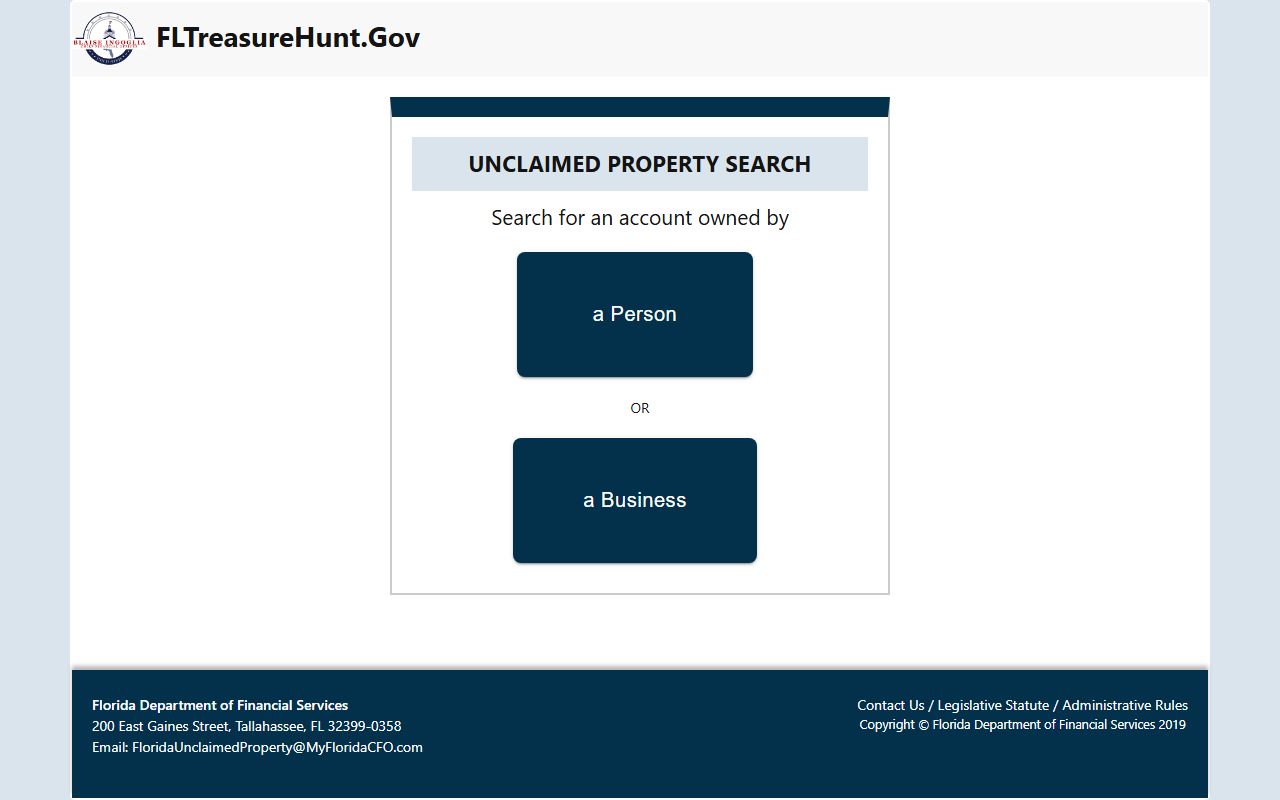
Search by person or business name. Each result shows the holder, property type, and reported amount. You can begin a claim directly from the search results. No account setup or payment is required to use this tool.
Florida Treasure Hunt Homepage
The Florida Treasure Hunt homepage serves as the starting point for all unclaimed property activity in the state, including St. Cloud searches.
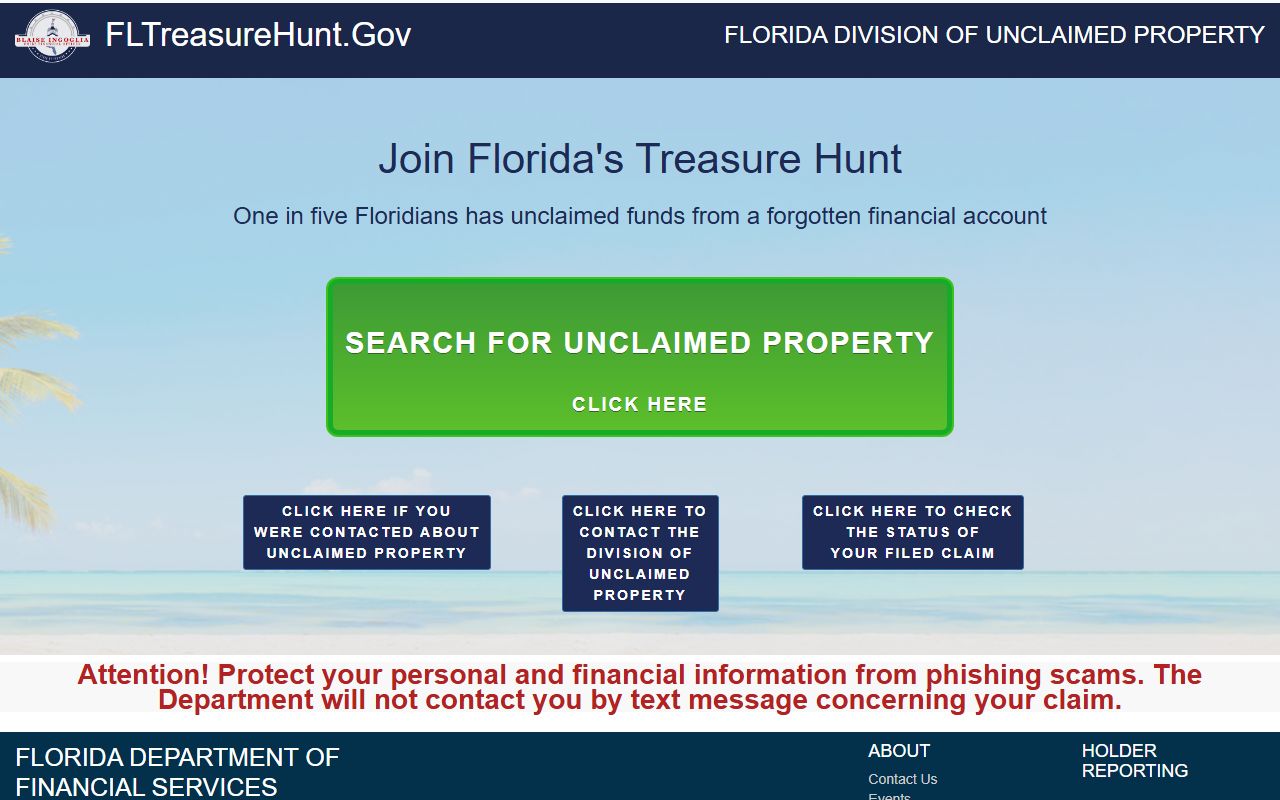
Use this portal to search, file claims, check the status of existing claims, and learn about how Florida handles unclaimed property. The site also warns about phishing scams and reminds users that the state will never contact them by text about a claim.
Unclaimed Property Laws for St. Cloud
Florida law gives St. Cloud residents the right to claim lost money at any time. There is no deadline. The state never takes ownership of unclaimed funds. It only acts as custodian. Money reported last year and money reported twenty years ago are treated the same. You can claim either for free.
Section 717.102 is the core rule. Intangible property unclaimed for more than five years is presumed abandoned. Wages follow a one-year rule under Section 717.115, so old paychecks from St. Cloud employers show up in the system relatively quickly. Safe deposit box contents become unclaimed after three years per Section 717.116. Holders in the St. Cloud area file their unclaimed property reports by May 1 each year as Section 717.117 requires.
Note: The Osceola County Clerk manages unclaimed court funds under Section 116.21, separate from the main state database. These include uncashed refunds, vendor checks, and jury payments connected to St. Cloud area cases.
Search Tips for St. Cloud Residents
A thorough search gives you the best chance of finding unclaimed money tied to St. Cloud. Keep these things in mind:
- Search every name you have used, including maiden and married names
- Try misspellings and shortened versions of your name
- Look up deceased relatives who lived in St. Cloud or Osceola County
- Search any business names connected to the St. Cloud area
- Use MissingMoney.com to run a multi-state search
New unclaimed property reports come in each May. A search that shows nothing today might reveal a St. Cloud account after the next reporting cycle. Search once a year at minimum. It is always free and takes just minutes.
Scam Warnings for St. Cloud
Be careful when searching for unclaimed money. The Florida Department of Financial Services will never text you or make an unsolicited call about a claim. If someone asks for your Social Security number, bank details, or an upfront fee to release funds, that is a scam. The only real way to search and file claims is through the official state website. It costs nothing.
Some companies offer to search for and claim St. Cloud unclaimed money on your behalf. They charge a percentage of what you get back. You do not need these services. The fltreasurehunt.gov process is straightforward enough for anyone. If you need help, call the Division of Unclaimed Property toll-free at 888-258-2253.
Nearby Cities
These cities are near St. Cloud. If you have lived or worked close to the city line, search those areas too since unclaimed money is tied to the last known address on file.
Osceola County Page
For more details on unclaimed money across all of Osceola County, visit the full county page.